







Typical Standard/System: AISI/ASTM
(e.g. A240, A312)
Grade/Alloy: AISI 304
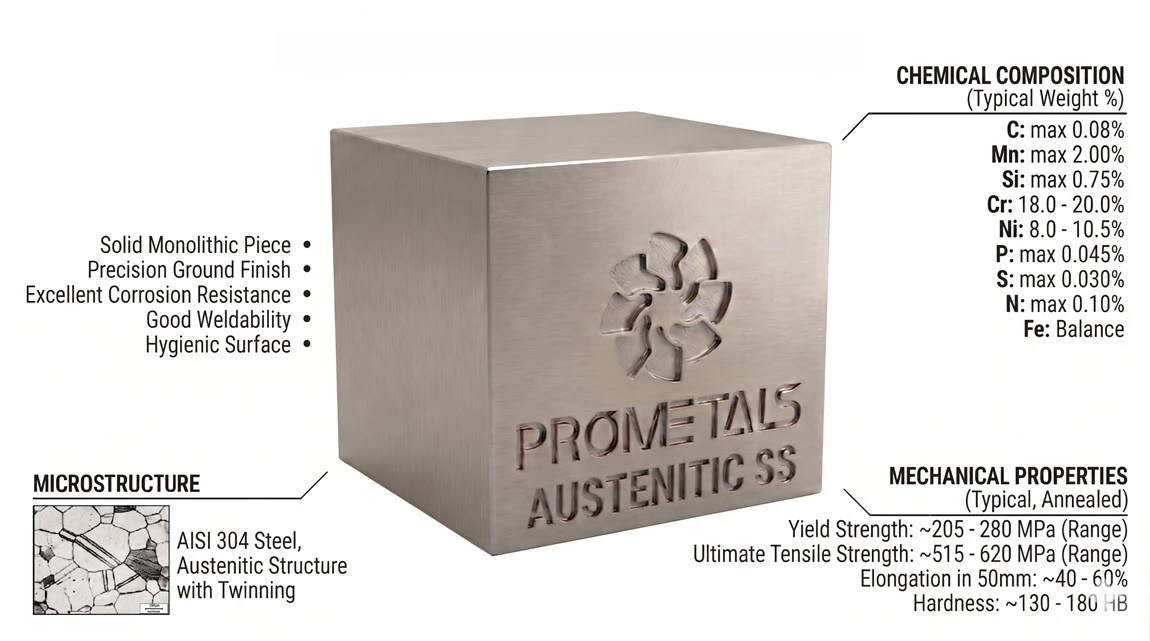
Typical Standard/System: AISI/ASTM (e.g. A240, A312)
Grade/Alloy: AISI 316/316L (UNS S31600, S31603)
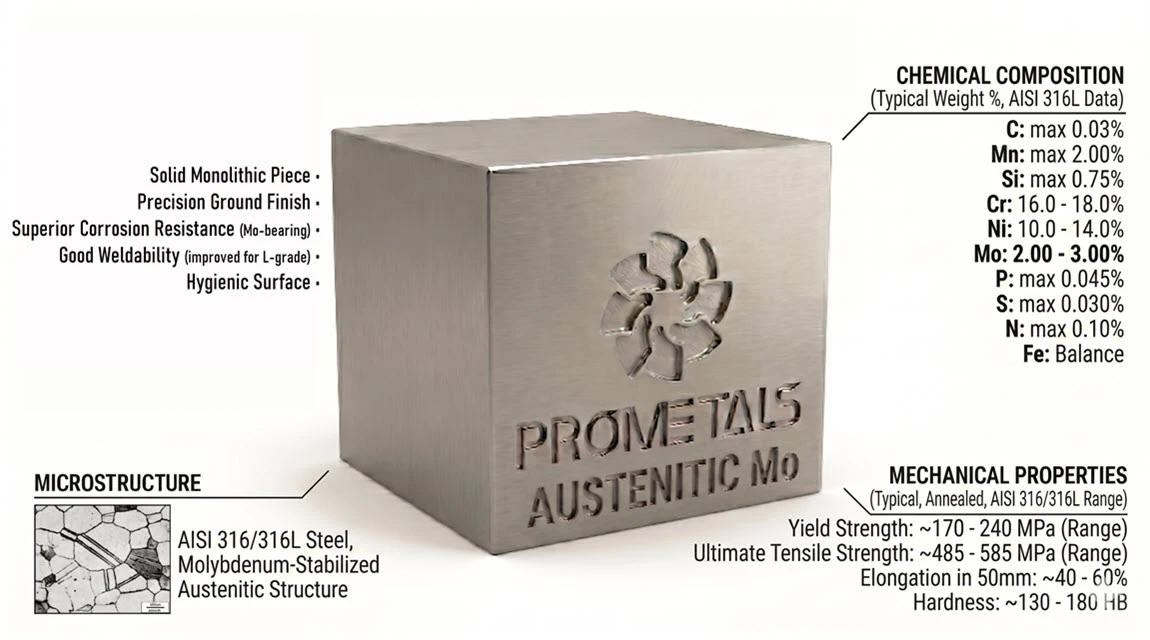
Typical Standard/System: AISI/ASTM
Grade/Alloy: A2, D2, M2, H13
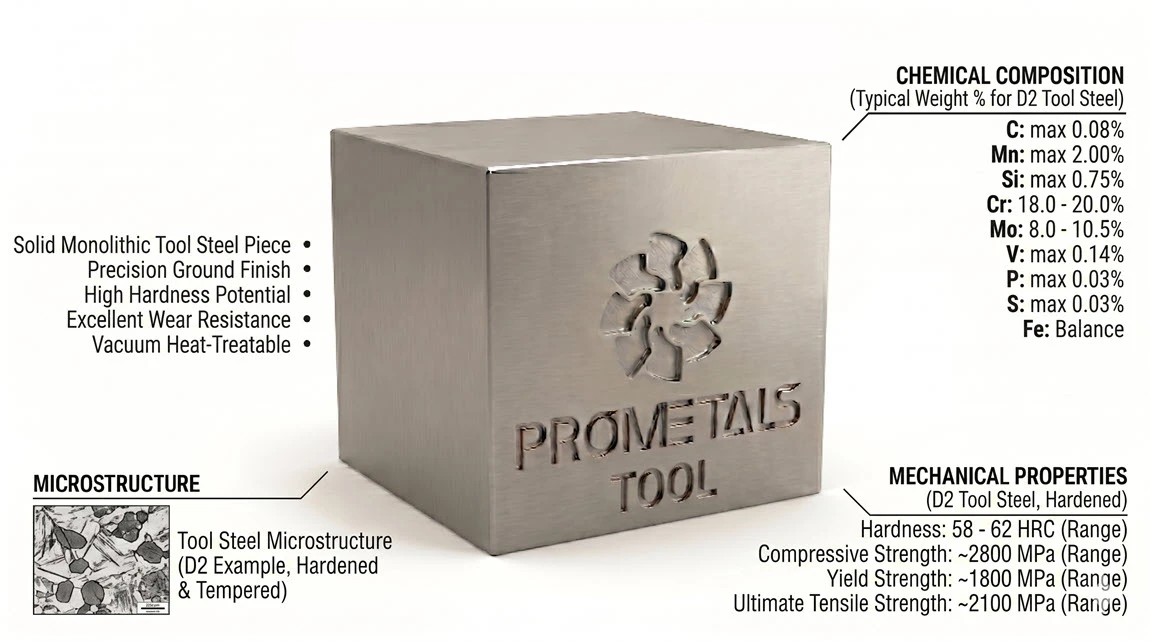
Typical Standard/System: SAE/AISI
Grade/Alloy: SAE/AISI 1020
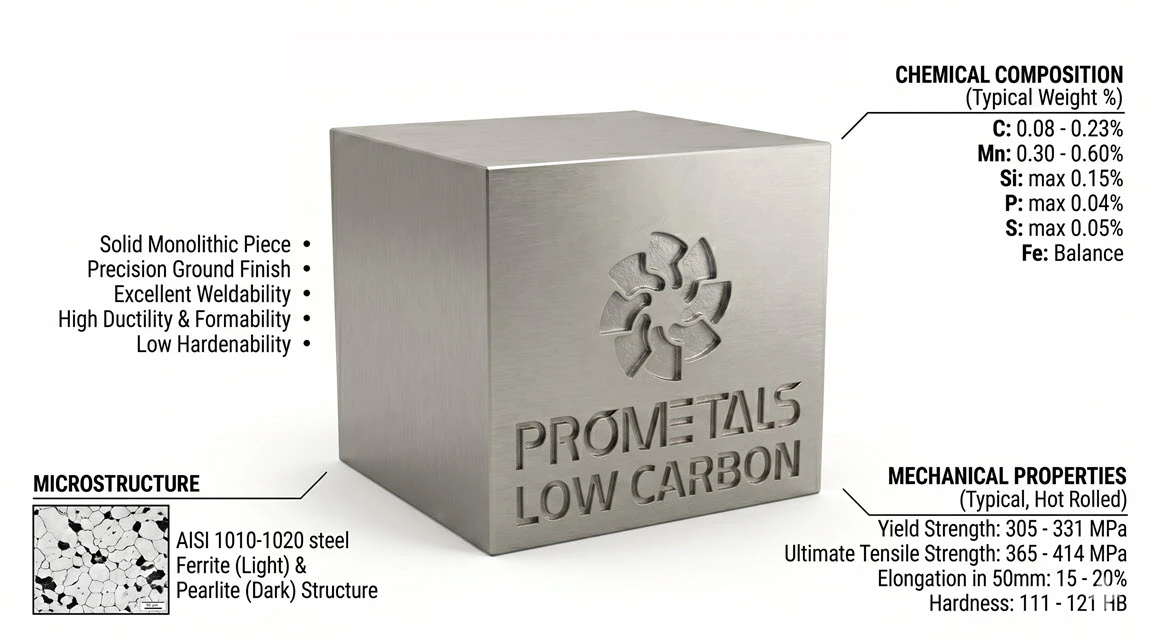
Typical Standard/System: SAE/AISI
Grade/Alloy: SAE/AISI 1045
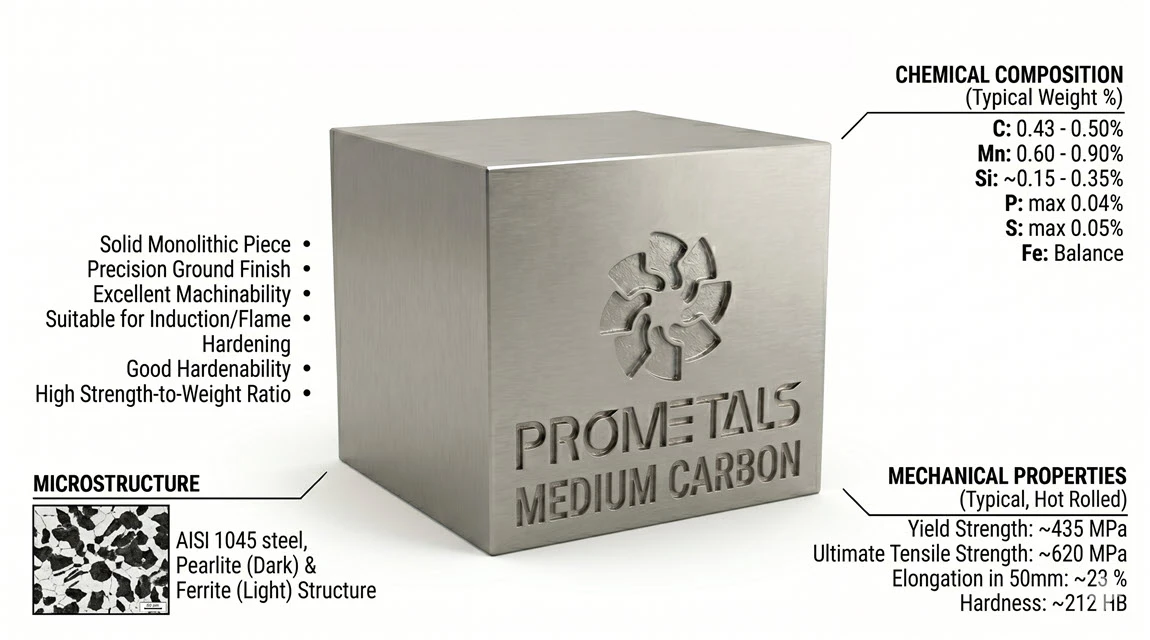
Typical Standard/System: SAE/AISI
Grade/Alloy: SAE/AISI 4140
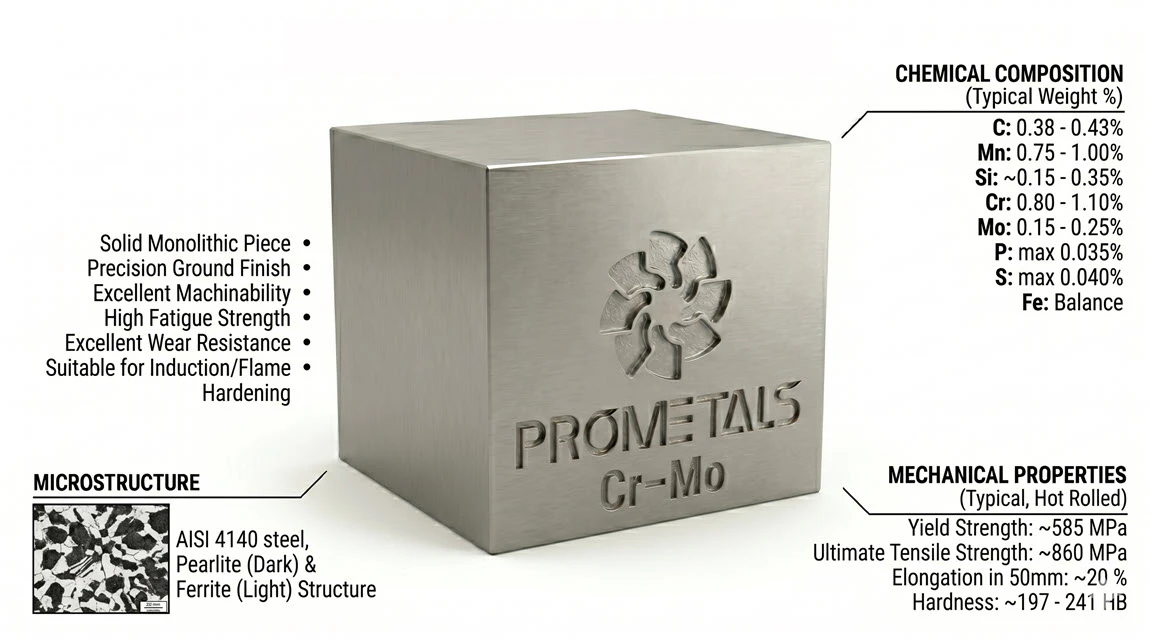
Typical Standard/System: SAE/AISI
Grade/Alloy: SAE 4340 - SAE 8620 - SAE 8640
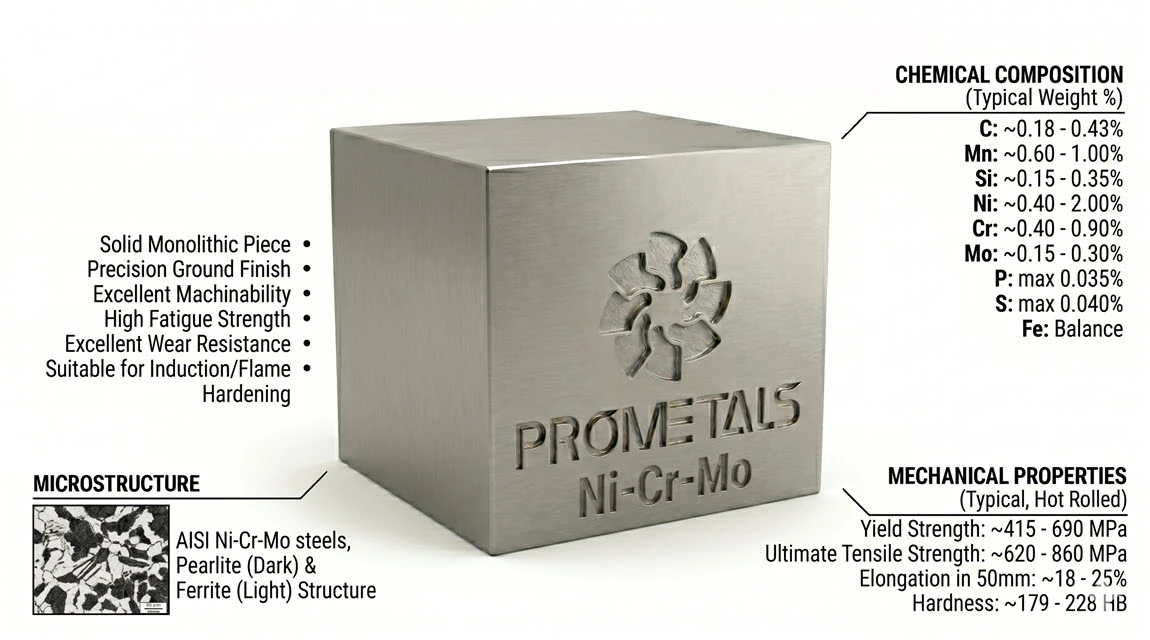
Typical Standard/System: ASTM
Grade/Alloy: ASTM A36
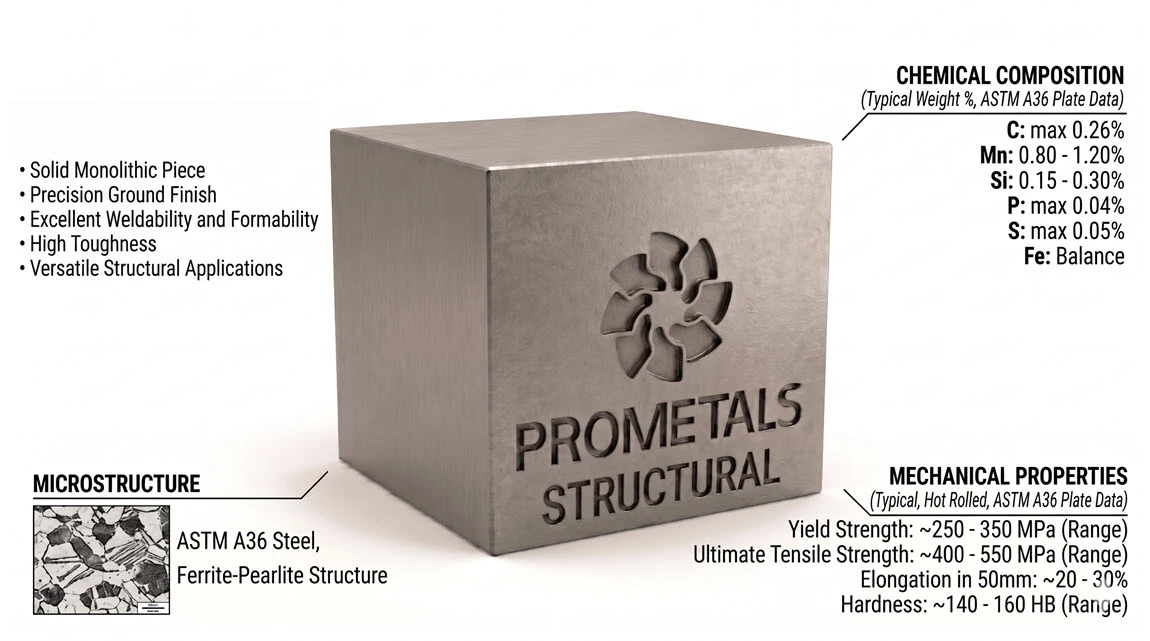
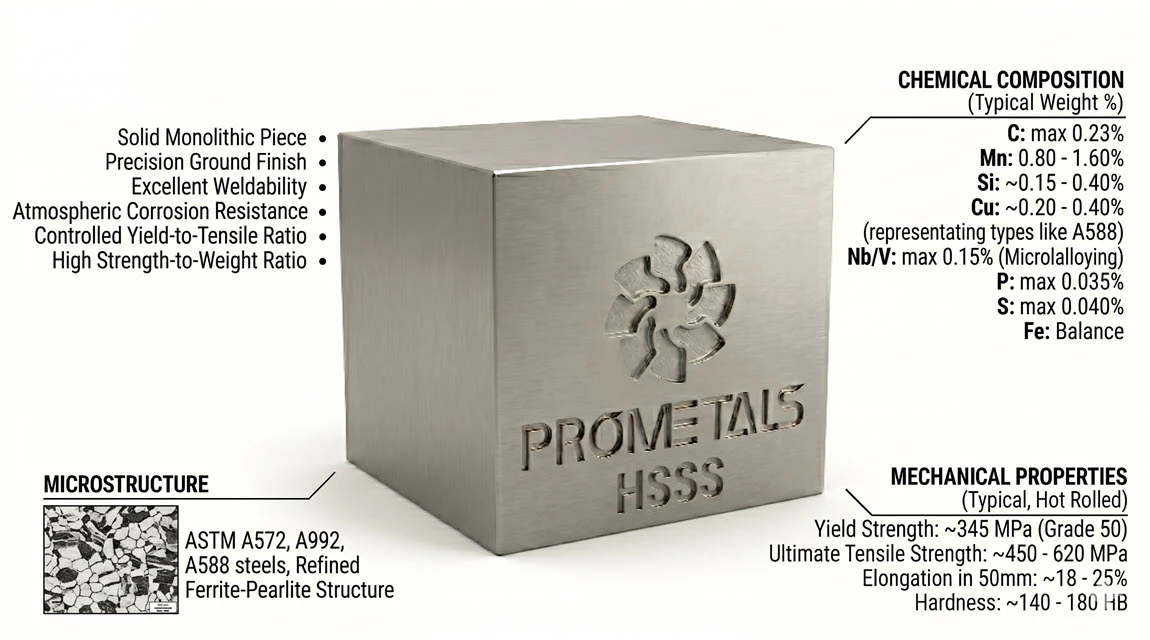
Typical Standard/System: ASTM
Grade/Alloy: ASTM A572 - ASTM A992 - ASTM A588
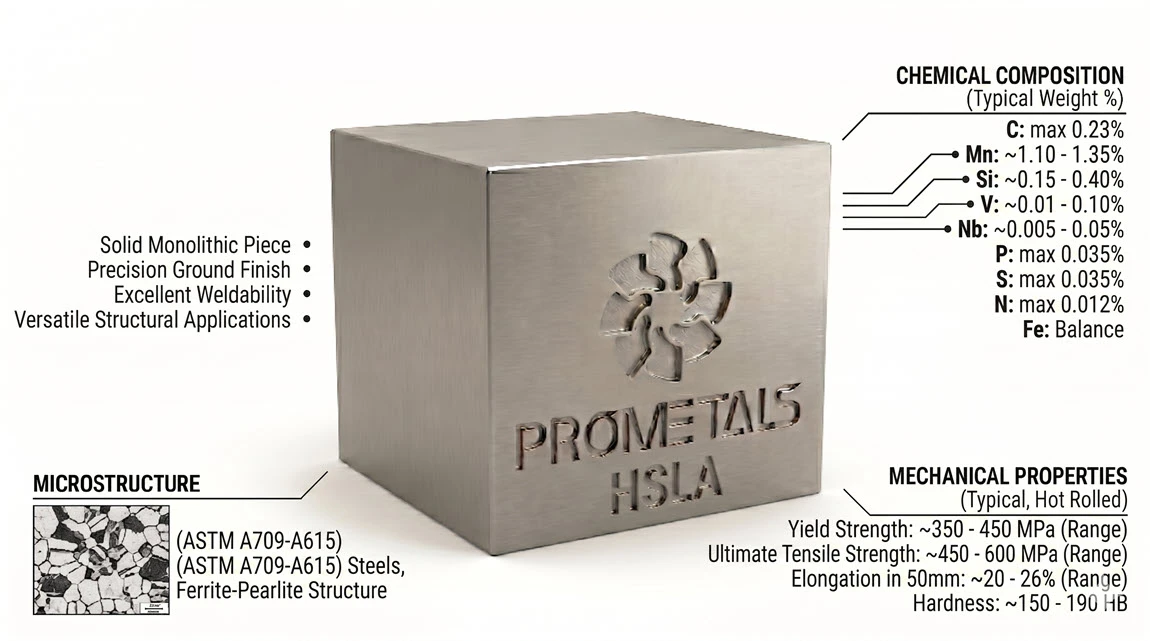
Typical Standard/System: ASTM
Grade/Alloy: ASTM A709 - ASTM A615 - Etc.
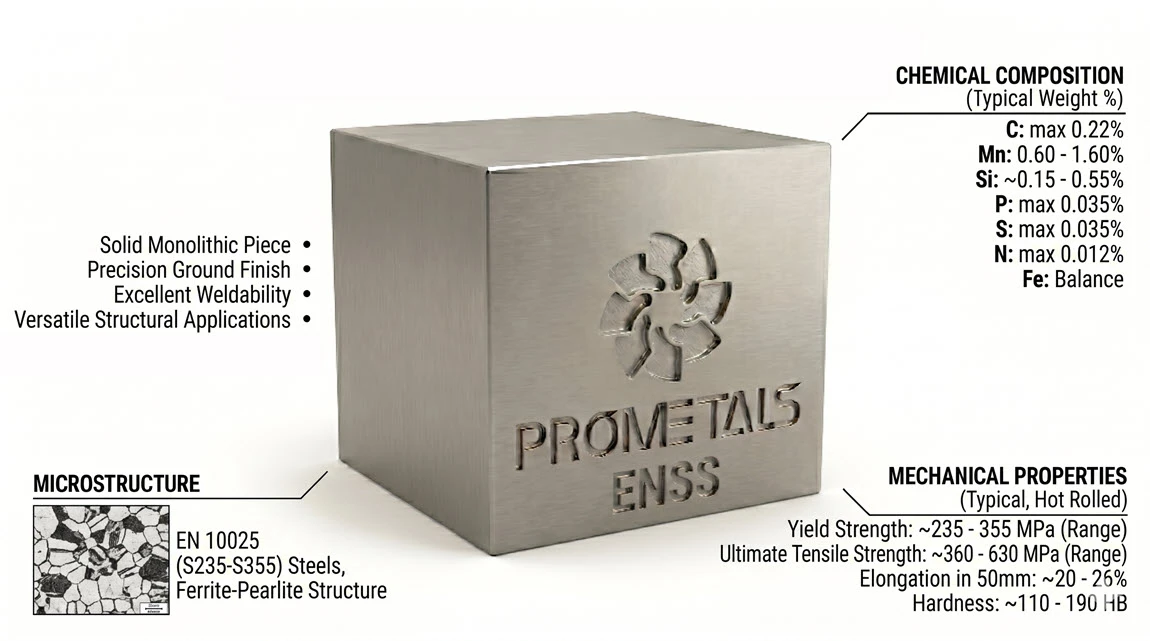
Typical Standard/System: EN10025
Grade/Alloy: S235 - S275 - S355 (EN10025)
The 4 Main Families of Steel
Steel is an alloy of iron and carbon, but small additions of other elements drastically change its behaviour. Click a card to view typical traits and subgroups.
Carbon Steel
Accounts for 90% of total production. Divided into Low, Medium, and High carbon grades.
Alloy Steel
Contains Mn, Si, Ni, Ti, Cu, Cr, or Al to enhance mechanical properties.
Stainless Steel
Contains at least 10.5% Chromium. Provides exceptional corrosion resistance.
Tool Steel
Contains W, Mo, Co, V. Extremely hard and heat resistant for industrial tooling.
Family Title
Description goes here.
Typical Usage Distribution
Steel Grade Explorer
Select a steel grade to analyse its composition and mechanical properties.
Select a steel grade to view details
AISI 1018
CarbonGeneral purpose low carbon steel.
Grade Comparator
Compare mechanical properties side-by-side to make informed engineering decisions.
- Tensile: Resistance to breaking under tension.
- Yield: Resistance to permanent deformation.
- Hardness: Resistance to indentation/wear.
- Ductility: Ability to stretch without breaking.
Property Profile
| Property | Grade A | Grade B | Difference |
|---|
Application Matcher
Find the right steel grade for your specific industry or use case.
Automotive
Gears, shafts, body panels, structural components.
Construction
Beams, rebar, structural plates, architectural cladding.
Medical
Surgical instruments, implants, hygienic surfaces.
Marine
Propeller shafts, fittings, salt-water exposure.
Cutting Tools
Knives, dies, moulds, drill bits.
Aerospace
Landing gear, high-stress structural parts.
At Prometals, our mission is to deliver engineering excellence through uncompromising precision. We recognize that in the industries we serve, there is no margin for error. We are committed to:
- Micron-Level Integrity: Ensuring every component meets or exceeds specified tolerances through rigorous metrological verification.
- Process Stability: Maintaining a controlled manufacturing environment to eliminate variables that compromise dimensional accuracy.
- Continuous Technical Evolution: Investing in the latest CNC technologies and specialized training for our highly skilled technicians.
- Total Traceability: Providing full transparency from raw material sourcing to final inspection reports.
- Client Partnership: Engaging in Design for Manufacturing (DFM) to optimize part performance and production efficiency for our customers.
- Quality is not an inspection step; it is the foundation of our process.