







Chat with us
Online
00:00
Hi! How can I help you?

PEGASUS® LCR CONCEPT LINE
The combination of premium materials, optimized design, advanced manufacturing processes and technological differentiation constitutes the foundation of Pegasus Refining Concept.
Operating at consistency levels of 2-8% compared to traditional high-consistency methods, Pegasus refining plates serves as the heart of this process, where precise mechanical treatment of fibers occurs through controlled compression and shearing forces between rotating disc surfaces.
The technology addresses critical industry needs for energy efficiency, fiber quality optimization, and operational flexibility. Pegasus LC refining systems can achieve energy savings of 142 kWh/t compared to conventional high-consistency refining while maintaining superior fiber development characteristics.
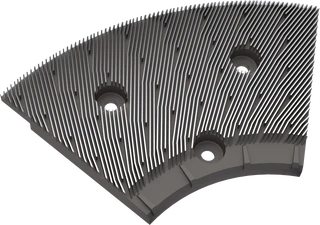
Optimized bar width, groove depth, and attack angle to stabilize refining intensity at high tph.

High-end CNC machines equipped with sensors that automatically adjust the tool path based on the machine's thermal expansion.
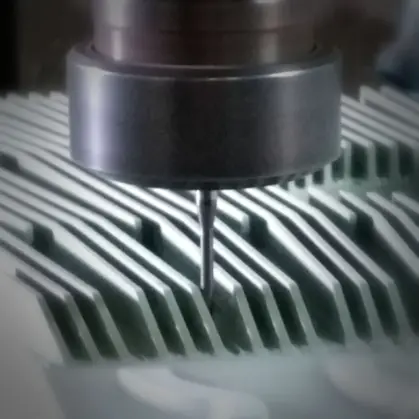
Configurations with features perfectly adapted to perform substantial work on the fibers.

Technical Specifications
Dimensional Parameters
Refining Area Thickness: 3-5mm operational range
- Standard thickness: 4mm ± 0.5mm tolerance
- Precision machining: ±0.01mm gap regulation capability
- Working diameter: 450mm to 1220mm (18" to 48" industry standard)
Material Composition
Primary Material: Martensitic stainless steel alloys
- Hardness range: HRC 35-60 depending on application
- Alloy grades: High chromium stainless steel, nickel-chromium alloys
- Surface treatment: Heat-treated for 16-20 hours controlled metallurgy cycle
Performance Specifications
Key Performance Metrics
- Energy efficiency: 10-15% reduction in power consumption per ton
- Maintenance intervals: Extended by 30% compared to standard plates
- Service life: 2-3x longer than conventional refiner plates
- Operational consistency: ±2% variation in beating degree control
Design Parameters and Construction
Bar Pattern Configuration
Bar Design Elements
- Bar height: 3-8mm depending on application
- Groove width: Variable from inner diameter (ID) to outer diameter (OD)
- Bar angle: Constant angle positioning from center circle
- Edge geometry: Tilted bars toward rotation direction for sustainable leading edges
Hydraulic Optimization
Modern Pegasus LC refining discs incorporate advanced hydraulic design principles
- Tangential feed connections: Ensure consistent flow distribution
- Pumping inlet bars: Increase hydraulic capacity and reduce plugging
- Venturi dam integration: Improve fiber-to-blade contact in ID zones
- Progressive groove widening: Prevent fiber plugging from ID to OD
Gap Control Technology
Precision gap control represents a critical design feature
- Gap range: 0.1-2.0mm operational window
- Control accuracy: ±0.01mm positioning precision
- Monitoring systems: Magnetostrictive displacement transducers (MTS)
- Response time: Real-time adjustment capability up to 2000 Hz sampling rate
Process Flow and Applications
Mechanical Treatment Process
Raw Fiber Input → Consistency Adjustment (2-8%) → LC Refining Chamber → Mechanical Shearing → Fiber Development → Quality Control → Output
Process Stages
- Feed Preparation: Fiber consistency adjustment to optimal 3-6% range
- Disc Engagement: Controlled gap setting based on fiber type and target properties
- Mechanical Treatment: Compression and shearing forces applied through bar crossings
- Fiber Development: Progressive fiber modification through multiple impacts
- Quality Monitoring: Continuous assessment of beating degree and fiber properties
Application Scope
Fiber Types Compatibility
- Softwood mechanical pulp: TMP, CTMP applications
- Hardwood pulp: Bleached and unbleached grades
- Recycled fiber: OCC, mixed office waste processing
- Specialty fibers: Bamboo, bagasse, annual crop fibers
Mineral Load Adaptability
- High mineral load: Optimized for filled paper grades
- Low mineral load: Suitable for tissue and newsprint applications
- Variable mineral content: Adaptive performance across mineral ranges
Industrial Applications
Primary Applications
- Newsprint production: Energy-efficient fiber development
- Tissue manufacturing: Gentle fiber treatment preserving bulk
- Corrugated medium: Strength property optimization
- Specialty papers: Customized fiber modification
Material Properties and Performance
Stainless Steel Alloy Characteristics
Martensitic Stainless Steel Properties:
- Corrosion resistance: Superior performance in acidic pulping environments
- Wear resistance: Extended service life under abrasive conditions
- Thermal stability: Maintains properties at elevated operating temperatures
- Machinability: Precision manufacturing capability for complex geometries
Performance Advantages
Energy Efficiency Benefits
- Specific energy reduction: 0-180 kWh/a.d. metric ton range optimization
- Power consumption smoothing: Reduced operational variations
- Mechanical efficiency: 37% energy transfer efficiency to pulp
Quality Improvements
- Fiber length preservation: Reduced fiber cutting compared to HC refining
- Strength development: Enhanced tensile properties at lower energy input
- Uniformity enhancement: Consistent fiber treatment across process width
Operational Considerations
Installation and Maintenance
Installation Requirements:
- Precision alignment: Critical for optimal gap control and performance
- Hydraulic systems: Servo-controlled positioning for gap adjustment
- Monitoring integration: Real-time performance tracking capabilities
Maintenance Protocols:
- Inspection intervals: Regular assessment of wear patterns and performance
- Replacement scheduling: Predictive maintenance based on performance metrics
- Cleaning procedures: Specialized protocols for stainless steel surfaces
Process Optimization
Operating Parameters:
- Consistency control: Maintain 3-6% for optimal performance
- Gap adjustment: Dynamic optimization based on fiber response
- Flow rate management: Balance throughput with quality requirements
- Temperature monitoring: Prevent excessive heat generation
Critical Success Factors
Successful Pegasus LC refining implementation requires careful attention to:
- Precise gap control and monitoring
- Appropriate disc pattern selection for fiber type
- Integration with existing process systems
- Operator training on advanced control systems
Economic Benefits
Cost Advantages:
- Energy savings: 10-15% reduction in refining energy costs
- Maintenance reduction: Extended intervals between disc replacements
- Production increase: 4-12% throughput improvement potential
- Quality consistency: Reduced off-specification production
Improvements & Benefits

- Ideal for continuous quality improvement programs.
- Reduced load on the machine, lowering energy costs.
- Excellent dimensional stability and surface quality.
- Increased values in tests performed for finished product quality analysis.
- Longer service life with easy maintenance.
Pegasus LC concept refining discs with 3-5mm thickness specifications represent a mature and proven technology for mechanical fiber treatment. The combination of precision engineering, high-strength stainless steel construction, and advanced process control delivers significant advantages in energy efficiency, fiber quality, and operational flexibility.
The technology's adaptability to various fiber types and mineral loads, combined with its superior performance characteristics, positions Pegasus LC refining as an essential component of modern pulp and paper manufacturing operations. Continued development in disc design, materials science, and process control systems ensures ongoing improvements in performance and economic benefits.
For optimal results, careful attention to installation precision, process parameter optimization, and maintenance protocols is essential. The investment in Pegasus LC refining technology typically provides rapid payback through energy savings, improved product quality, and enhanced operational efficiency.
To implement the requirements of the Quality Management System and company policies, the quality department ensures that objectives are met within the established deadlines; implements supervision criteria for product approval; leads improvement, training projects and manages the objectives.
Downloads & Resources

FAQs
Field data shows +10–20% longer service life versus baseline, subject to ash, silica, and settings.
Self-cleaning groove progression and reliefs sustain flow and limit fines accumulation.
Trials indicate +8–15% tph at comparable kWh/t by maintaining SEL and optimizing dilution.
Provide refiner model, diameter, segment count, bolt pattern, and rotation; we validate and provide adapters if needed.
Change-outs are planned by wear depth and KPIs; many mills extend intervals 10–20% with PEGASUS.
Get in Touch
Ready to improve refining performance or build custom metal parts?
Tell us about your challenge and attach drawings or data—we’ll respond quickly.