







Chat with us
Online
00:00
Hi! How can I help you?
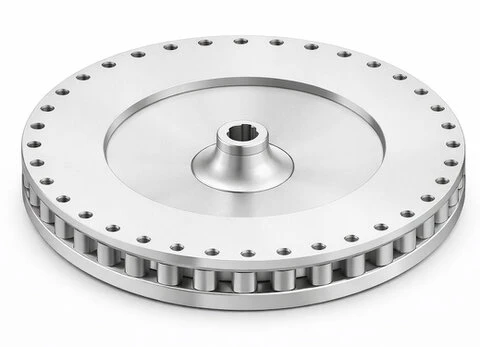
The Rotor Pin Mill is an advanced high-efficiency centrifugal grinding solution specifically engineered for the size reduction of friable materials, achieving optimal performance with substances that possess a maximum hardness of 3 on the Mohs scale.
Utilizing a unique combination of centrifugal force and mechanical impact, this innovative equipment ensures consistent particle size reduction while maintaining the integrity of the material. Ideal for a wide range of applications across various industries, the Rotor Pin Mill stands out for its reliability, efficiency, and capability to deliver precise results, making it an essential tool for any operation focused on fine grinding and particle size optimization.
Utilizing a unique combination of centrifugal force and mechanical impact, this innovative equipment ensures consistent particle size reduction while maintaining the integrity of the material. Ideal for a wide range of applications across various industries, the Rotor Pin Mill stands out for its reliability, efficiency, and capability to deliver precise results, making it an essential tool for any operation focused on fine grinding and particle size optimization.
PRME SS316
Recommended Applications
- Starch Extraction: Corn, Potato and Legume Processing
- Pharmaceutical Industry
- Grinding of pepper, cinnamon, turmeric
- Sugar refining and densification
- Flour and derivative products
Technical Caracteristics
- SS316 stainless steel with polished finish (Ra 0.6-0.8 μm)
- Mirror-finished central hub with uniformly distributed pins
- Radial pin pattern for maximum grinding efficiency
- Fixing system on the external circumference
- High-precision machining with strict tolerances
Flow Characteristics
- Pin wear > 20% of original length
- Imbalance > 0.5 mm/s vibration
- Visible cracks in hub or pins
- Grinding efficiency loss > 15%
TECHNICAL SPECIFICATIONS
Materials and Properties
| Property | SS316 | Alternatives |
Corrosion Resistance | Excellent | SS304 (Good) |
Hardness | 200-250 HB | TC4 (300+ HB) |
Surface Finish | 0.6-0.8 μm Ra | 0.4-1.2 μm Ra |
Food Grade Quality | FDA Approved | Variable |
Wear Resistance | High | Very High (TC4) |
Standard Dimensions and Configurations
Laboratory Rotors
- Diameter: 50-100 mm
- Number of Pins: 12-24 units
- Speed: 3,000-10,000 RPM
- Application: Testing and development
Industrial Rotors
- Diameter: 200-600 mm
- Number of Pins: 36-120 units
- Speed: 1,500-6,000 RPM
- Capacity: 50-5,000 kg/h
Critical Operating Parameters
Operating Speeds
- Henry Simon HSSPM: 3,000-5,500 RPM ¹
- DP Pulveriser UNIVA: Variable speed up to 250 m/s tip speed
- Hosokawa Mikro UMP: Optimized for fineness up to 35 μm
Manufacturing Tolerances
- Diameter: ±0.0005" (±0.013 mm)
- Dynamic Balancing: Grade G-2.5 per ISO 1940/1
- Concentricity: ±0.002" (±0.05 mm)
Technical and Dimensional Specifications
Rotor Maintenance and Service Life
- Recommended Maintenance Intervals
Visual Inspection
- Frequency: Weekly
- Checks: Pin wear, cracks, imbalance
Replacement Indicators
Criteria for Rotor Replacement:
- Pin wear > 20% of original length
- Imbalance > 0.5 mm/s vibration
- Visible cracks in hub or pins
- Grinding efficiency loss > 15%
Expected Service Life
SS316 Rotors:
- Food Applications: 3-5 years
- Starch Processing: 2-4 years
- Abrasive Materials: 1-2 years
- Pharmaceutical (low volume): 5-8 years
Preventive Maintenance
- Lubrication: 48-200 hours (depending on operating regime)
- Balancing: Every 6 months or 2,000 hours
- Pin Replacement: 6-12 months (depending on processed material)
Key Recommendations
- SS316 Material offers the best balance between corrosion resistance, food-grade quality, and cost for most industrial applications.
- Pin Configuration: The number and arrangement of pins should be optimized for each specific application, considering the material to be processed and desired fineness.
- Preventive Maintenance: Critical for maximizing service life and maintaining operational efficiency, especially in continuous applications.
Recommendations for Process Engineers
- Supplier Selection: Prioritize manufacturers with proven experience in the specific application
- Material Specification: SS316 for food/pharmaceutical applications, consider TC4 for highly abrasive materials
- Maintenance Program: Implement vibration monitoring and regular inspections
- Spare Parts: Maintain inventory of spare rotors to minimize downtime
Get in Touch
Ready to improve refining performance or build custom metal parts?
Tell us about your challenge and attach drawings or data—we’ll respond quickly.